
Doula Supporting Dad too, I don't take their place!
"So... what does that leave for me to do?"
It's one of the first questions I hear from partners when hiring a doula comes up. Sometimes it's said out loud, sometimes it's just sitting quietly behind a raised eyebrow. And it's such a fair question. If someone else is going to be in the room supporting your partner through labour, where does that leave you?
Here's what I want every partner to know before we've even had our connection call, I am not there to take your place. I'm there to help you keep it and be part of the experience.
A team from the very first call
From our very first connection call, I invite your partner to join the conversation. This isn't "her doula who happens to also talk to you," it's a team from the beginning.
Through our antenatal sessions, we talk about what labour might look like, what your birth preferences are, and what role feels right for you to play, not the role you think you're supposed to play, or the one from a film you half-remember. Some partners want to be hands-on with counter-pressure and comfort measures. Some want to hold space quietly. There's no single "correct" version of a supportive birth partner, and part of my job is helping you find yours, feel confident in the space and understand your role with protecting the birthing environment.
"I don't want a stranger at the birth"
I remember a connection call where a client's husband said exactly that. He didn't like the idea of a stranger being there for something so personal. It's such an honest thing to say, and I understood exactly where it was coming from. So we talked it through. If we chose to work together, I explained, we'd spend months building that relationship before labour ever began, through antenatal sessions, phone calls, WhatsApp messages and getting to know each other properly as a family. By the time his wife's body and baby were ready, I wouldn't be a stranger at all. I'd be a familiar, trusted face, someone who'd walked alongside them for months. The truth is, the people most likely to be strangers on the day are the midwives on shift, wonderful as they are, since there's often no way to meet them before you arrive at hospital. That's part of what continuity of a doula offers, one constant, familiar presence, right the way through.
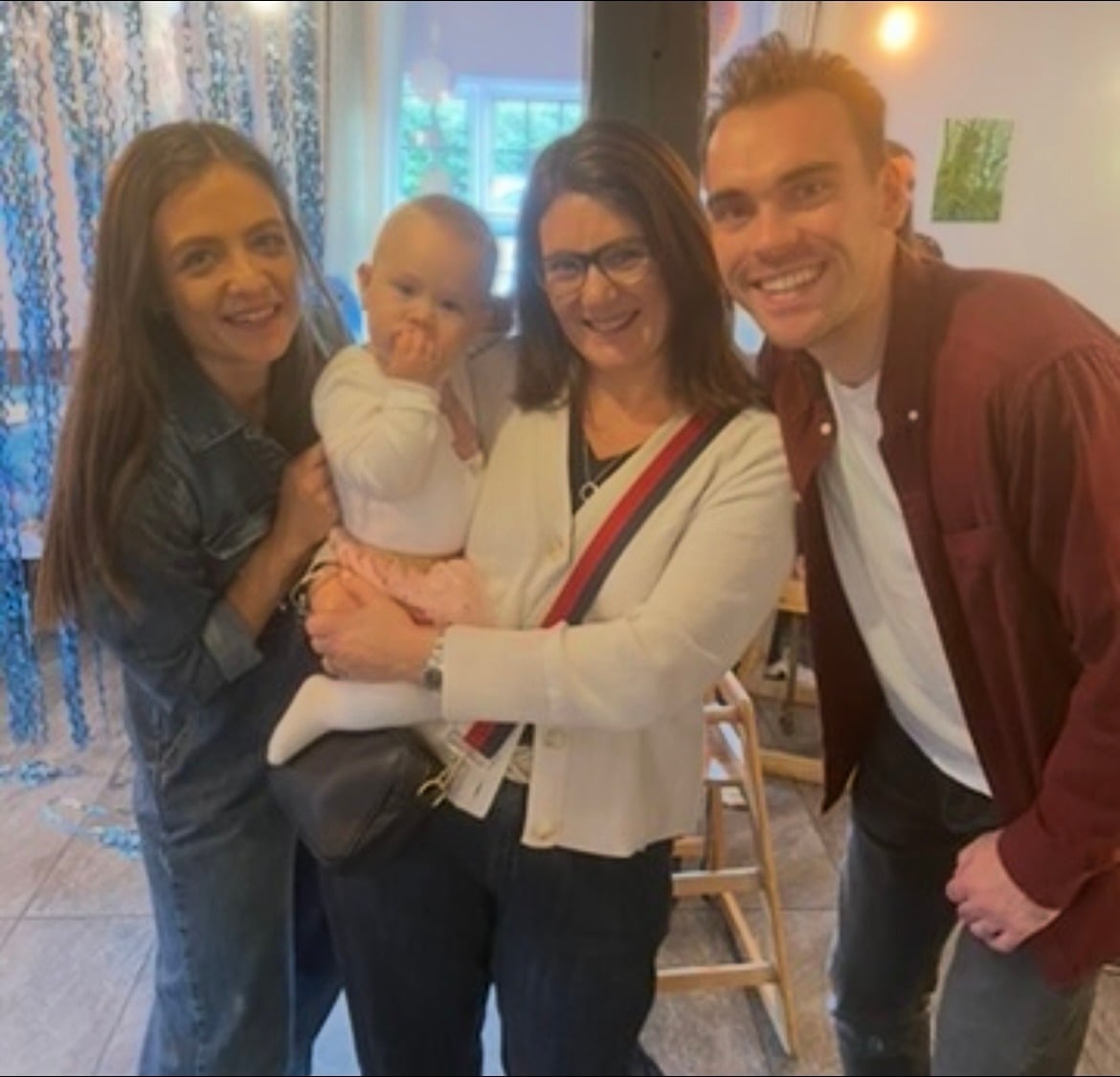
"My husband also found Chantal’s support extremely helpful. Especially as we were choosing a home birth."
Ben & Sophie Stratton
Support on the phone, from the very first surges
Early labour is often when stress can run high, not because anything is wrong, but because it's all so new. The day you have both been preparing for has arrived and the unknown can feel enormous. In those heightened moments, it's completely normal for even the most prepared partner to go blank. Forgetting when to call triage, what comfort measures to reach for, or how to set the room up so she feels safe and calm and how to protect both your energy levels. That's exactly what I'm there for on the phone. We'll talk it through together, step by step, for as long as you need, gently gauging alongside you when the time feels right for me to come and join you in person.
Permission to step out, without guilt
Labour can be long. It can stretch through a night, into a day, into another night. Partners often feel they can't leave the room, not even to eat, drink, or catch 30 minutes of sleep, because what if something happens the moment they step out?
That's exactly where I come in. Knowing I'm right there at her side means you can step out for a breather, grab some food, splash water on your face, or just sit down for a minute, without the guilt, and without anything being missed. You come back steadier, and that steadiness matters just as much as anything happening in the room.
Steady ground if the birth changes
Birth is unpredictable, and that's often when partners feel most out of their depth. Conversations about bringing the midwives attention back to your partner's birth preferences, assisted birth, or an unplanned caesarean can come fast, in clinical language, at the worst possible moment to process anything new.
When that happens, I help slow things down. I make sure you both understand what's being offered, what the options actually are, and what questions are worth asking, so that whatever decision gets made, you feel part of the decision and understand the risks and benefits.
Finding the words with medical staff
Advocating for someone you love, in a room full of people in scrubs, using terminology you've never heard before, is genuinely hard. I work alongside you both to build confidence in that conversation, helping you know what to ask, when to ask it, and how to speak up for your partner's wishes when it counts. You don't need to have memorised a script. You just need to know you won't be doing it alone.
Why this isn't just my opinion
None of this is just a nice idea, either. Continuous doula support is one of the most well-evidenced interventions in maternity care. It's been linked to shorter labours, fewer caesareans and instrumental births, less need for pain-relieving medication, and higher satisfaction with the birth experience for both parents, not only the person giving birth.
What's often missed in that research is the ripple effect for partners. Doulas don't take the meaningful parts of the role away from them; they take away the parts that were never really about connection in the first place, like trying to remember every technique from an antenatal class while also managing your own nerves. That frees partners up to do what only they can do: hold your hand, look you in the eye, and simply be there, emotionally, without also trying to be a clinician, a note-taker and a hospital-policy expert all at once.
Here are 2 trails for you to look over, if you would like some further reading. The well know Cochrane Review, which highlights the benefits of continuous support for women during labour and the randomised control trial of continuous support in labour.
Present, informed, and never on the side lines
So if you're a partner reading this, wondering whether a doula means stepping back. You're not, you're stepping into the role you're actually there for, supported, rather than stretched thin.
Together, we support you both as a unit. Your partner stays present, informed, and connected, never on the sidelines.
If you'd like to talk this through together as a couple, book a connection call and let's get to know each other.

Comments